


Control Resonant Review: Is Remedy's Sequel Good?
Through a mirror, inverted is made right.

Thank you for checking out another hot post on Bonfire Sit. If you haven't already, subscribe to my YouTube channel, follow the Bonfire Sit Podcast, and follow me on Instagram for more #content.

I shouldn't be surprised that, with Control Resonant, Remedy has taken something unremarkable and made it feel extraordinary, the world of Control is built on the idea. A nondescript skyscraper in New York is actually The Oldest House, the shapeshifting headquarters of the FBC.
Through paranatural forces, everyday items can become Objects of Power: a floppy disk can give someone telekinetic powers; a jukebox can teleport people to faroff locations; a slide projector can open doorways into alternate realities.
The first Control relished subverting expectations. Its sequel, however, achieves the same in a way that is so much more impressive than I expected. It takes a tired gameplay formula and worn out design ideas and makes them feel unexpected and exciting again.
I have been playing a game where you activate radio towers to uncover parts of a map; you often do mostly inconsequential fetch quests for random NPCs; you work through a checklist of tasks to clear icons off a map; you liberate zones of enemy threats; you make tweaks to weapons and abilities to get a little bit stronger.
Before playing this game, I would have said I am well and truly over all of that. I would have said I'm exhausted of- and by- same-y open-world sandboxes. And yet, a few hours in to playing t, I couldn't put Control Resonant down. It compelled me in a way that, aptly, felt supernatural.
How it did that is almost as inexplicable as the paranatural threat that has escaped The Oldest House and is overrunning New York. Every part of the game is built using the familiar parts of a by-the-numbers open-world action game, but it's welded together in a way that only Remedy is capable of. It's brought to life by New Weird design aesthetics, narrative hooks, and characterizations that Remedy has become the unquestionable master of.
Resonant is set in New York, a place we've been to many times before; under siege in Battlefield 3; while possessed by a demonic force in The Darkness 2; to beat the shit out of Sean Paul, Ice T, Xzibit, and Snoop Dogg in Def Jam: Fight For New York; or to tear it down and cause mayhem as The Incredible Hulk. Even with an numerous adventures that The Big Apple has played host to, it's never been depicted in the way that it is in Control Resonant.
In Remedy's New York The Hiss and the Mold are now at odds with Patterning, a new paranatural force that has turned the city into a geometrically and architecturally nonsensical place; a modern metropolis filtered through a fever dream.
In Alan Wake 2, New York became a strikingly surreal noir nightmare dimension. In Control Resonant, Remedy has outdone itself by reshaping it into a logic-defying playground for its protagonist and players alike.
It's a place where up is down and down is up; left is right and right left; cars are parked on vertical roads that shoot up into the sky at right angles; freestanding doors teleport you from corner of the city another next; and its streets are filled with floating hostile entities transformed by the competing otherworldly forces at play.
These are threats that can only be taken on by Dylan Faden, who, at one point was being groomed to lead the FBC. However, negligence, mistreatment, and outright abuse instead shaped him into a dangerous weapon; a ticking time bomb that went off and marked him as a monster from that moment on.
In Resonant, Dylan has been excised of The Hiss that took over him and is reluctantly conscripted into figuring out what's going on. Jessie, his sister and the acting Director of the FBC, has vanished. And so, the boy whose abilities got him trapped, experimented on, and then abandoned is to use those same powers to show he's not just Dylan Faden, Prime Candidate 6, he's Dylan Faden, a man who has earned the trust of people that see him as a villain. He's Dylan Faden, a victim that deserves the freedom to define who he is on his own terms.
The FBC has been decimated, so there's very few out there to witness his efforts, but after being poked and prodded like a germ under a microscope, an empty city feels more freeing than a room filled with derranged scientists.
Dylan is there to prove who he is to himself and if a few others see him for who he knows he is along the way, he can find meaning in that too. And does encounter others along the way. Some are as lost as he is and are trying to figure out how their lives have been turned upside down. Others, like his handler Zoe, are charged with turning things the right way round again, and Dylan is a tool to do so.
But there's more to Zoe than the deeply untrusting personality she welcomes Dylan with initially. Her arc of discovery and empathy runs parallel to Dylan's as she watches him slowly chip away at the fear, suspicion, and disdain that surrounds him by helping in any way he can. Even in the face of resistance and disapproval.
She may be a voice over a radio, but what Zoe says guides Dylan in a way that he's never had before; certainly not from Dr. Darling, who saw him as nothing more than a pet project for personal glory. Zoe's guiding hand also reveals that she's as invested in his redemption as he is. Intentionally or not, she is what helps him understand a world he wasn't allowed to see and for which he has no context for.
Sometimes it's through a joke that Dylan can meet with bemusement or match with his own nascent brand of humor. Other times, it's through statements that are more profound than a sarcastic quip; statements that become a North Star.
"People don't change, Dylan," she says after discovering the extent of the horrors Dylan once unleashed. "So, what kind of person are you?"
It's a question that will take a while to answer because Dylan is evolving; as a person and as a parautilitarian. Following the breadcrumb trail left by his sister provides clues to where Jessie is and what she's doing, but also empowers him with abilities he can use to reach new heights and face new challenges.
His growth lets him see more and do more; whether that's glide from pavement to rooftop; stand on walls and attach to ceilings; or by becoming more proficient at wielding the strange tools at his disposal.
The Board, the barely discernible voice-of-god that gave Jessie her orders as Director of the FBC has moved on to establishing a new, similarly contentious relationship with her brother. The Board's motives are as inscrutable as the otherworldly groaning they communicate in, but they do give Dylan a safe space inside his own mind to retreat to when he needs it.
And he needs it often. To learn how his weapon, the Aberrant, works and to push it to its limits by transforming and fortifying it. It's where he safely explores the extent to which he can collaboration with it. Even still, The Board is ever present, watching, demanding, scheming.
Between The Hiss and the Mold, there's no shortage of deadly threats to contend with. For some he needs to be able to strike hard to break through; for others he needs to be able to strike fast to limit their movements. And he needs to do this while staying on his feet and using his agility to narrowly escape attacks to give himself another chance. He can use the twisted world around him to his advantage and summon friendly entities to fight alongside him--his growing paranatural abilities are more than a match for the oddities that await.
Each tenuously connected zone of New York changes as he re-establishes FBC presence. The experience that comes from eliminating enemies, helping the helpless, and solving strange mysterious isn't what fuels his personal growth. Instead it's invested into the world around him to instigate change, improving his odds by granting him access to resources that can be used for his personal growth or keep him on his feet when things get difficult.
Dylan's job is no easy task; but it's undoubtedly one worth the effort. It's where proving his worth is at its most engaging and most thrilling. For better and for worse, combat is what Dylan was built for, so the chaos is where he thrives; the firework of explosions; the mind-bending shifts in plane; the constant barrage from enemies of all shapes, sizes, and strangeness are what make his abilities flow. It's how he shows that what he was doesn't have to be who he is
Although each battle is initially a desperate fight for survival, Dylan's growth becomes perceptible through the rapid pace at which his ability to dispatch threats progresses. The climb in his strength is satisfying, as is the opportunity to really test him against Resonants. These supernatural entities pose difficult challenges that demand strategy and aggression unlike anything else in New York.
But there's also an emotional weight to each of these confrontations too. Resonants are corrupted forms of people that had lives, talents, passions, and problems. The tragedy of their desecration by the paranatural entities is expressed through what they have become: sad reflections of who they used to be.
In a cruel irony, Dylan's road to salvation is paved with the remains of the corrupted, misunderstood, all robbed of opportunity in a way that he is all too familiar with. And now, in some small way, he is not all that different than the perpetrators of his abuse.
Dylan's story is one of heavy themes and somber moods. Sure, it is often also punctuated with moments of levity that arise from the weirdness and out of the wonder that New York has become. But defeating Resonants often brings with it a melancholic mixture of accomplishment and loss. It's a unique feeling that is expertly captured and effectively conveyed.
But on his arc of redemption, each victory inevitably returns Dylan to the greater task at hand; more zones to liberate; enemies to fight; objectives to achieve. It may be repetitive, but the impact of his efforts is evident. The FBC slowly finds its footing again and the questions around Jessie and what she's doing become less opaque.
More importantly, Dylan shows that he was never a monster with super powers, just a normal boy led astray by selfish, powerful people.
Control Resonant is proof that it's foolish to let someone or something be defined by the faults you see in them. There's always unexplored perspectives and untapped potential; opportunities to find new understandings, to reconcile, and to rebuild, even if they're not obvious.
This could be for a person like Dylan, who through no fault of his own was cast as the villain in everyone else's story. Or it can be a type of game that became a tool for thoughtless, empty, and transactional interactions, instead of being an instrument to express creativity and forge new paths.
And for Remedy, Control Resonant is such an instrument. It achieves something I never expected. It took a genre that I was ready to cast aside as old, worn out, and uninteresting and showed me that, when given a chance, it has more to give.
Control Resonant is a subversive game that makes something ordinary feel remarkable. It is a real Object of Power.
Remedy Entertainment
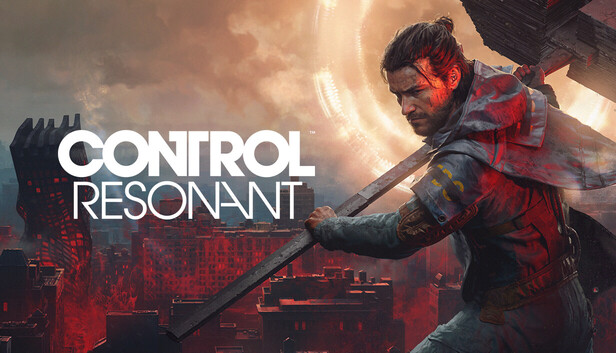
Explore a warped Manhattan on the brink of paranatural annihilation in this thrilling action-adventure RPG. Unleash the extraordinary powers of Dylan Faden as he fights for his humanity and our survival against a reality-bending cosmic threat.