


I Didn't Like Townfall, But It's What Silent Hill Needs
In my restless dreams, I see that franchise...

Thank you for checking out Bonfire Sit. If you haven't already, subscribe to my YouTube channel, the Bonfire Sit Podcast, and follow me on Instagram for more #content from me.

It's ironic that, over the last few years, Konami has been asking itself the same question that Silent Hill fans have been pondering since the first game launched in 1999: What is Silent Hill?
For fans, the answer to that question unravels a deeper understanding of the stories that happen in the fog-blanketed town, as well as the complexities of the wayward characters that find themselves inexplicably drawn to it. For Konami, the question is about understanding what makes the franchise stand out amidst a crowded market of psychological horror games, as well as where it can be taken without compromising that.
In both cases, there's no definitive answer. In many ways, that's the point: What Silent Hill is, is a matter of interpretation, and what it needs to be is a matter of perspective.
Townfall is developed by Screen Burn Interactive Limited in collaboration with Konami. It's set in Scotland and is the first game fully in first-person. Those are both departures that prove that Silent Hill, the fictional setting, and the intellectual property, can be whatever you want or need it to be. But for the most part, I haven't enjoyed playing Townfall. And yet, at the same time, it's exactly what I want Silent Hill to be and what I believe it needs to be to keep the series relevant.
Bloober's excellent remake of Silent Hill 2, like the source material, explores trauma, guilt, sexuality, repression. Meanwhile, 2025's Silent Hill f was a reinvention rooted in Japanese culture and grapples with themes of cultural oppression, drug abuse, familial pressures, and the obligations of tradition.
Although Townfall makes another unexpected pivot away from tradition, it still has everything that is crucial to an authentic Silent Hill experience. You play as Simon, an American that returns to the town of St. Amelia for initially unclear reasons. While there, he goes through a horrifying introspective journey that intersects with other characters and events from the town's tragic past. As he descends deeper into the journey of self-discovery, his growing understanding slowly colours in the full picture.
The story of Townfall explores heavy themes like the corrosive nature of guilt, social unrest, and corporate exploitation. The broader themes that drive the narrative are strong and, for the most part, explored in a way that should have kept me engaged. However, I found the characters to be a bit of a weak link that undermined the strength of those themes.
Zoe Ellis, a nurse that you play alongside Simon and another character, is the stronger of protagonists. Who she is and what she's experienced exists in that difficult and confusing grey area that makes Silent Hill characters so compelling.
In all of its incarnations, old and new, what you bring to Silent Hill informs how you are received by it and what you take away from it. And in Townfall's case, Zoe's difficult past makes her gruelling present feel more true to the series. Simon, on the other hand, while certainly facing his fair share of demons, has a difference in his circumstances that make him too much of a comfortable surrogate for the player's lack of understanding.
The way I think about it is that Silent Hill 2's James Sunderland is presented as someone who arrives at the town seemingly at the invitation of his deceased wife, and is trying to understand why. But at the same time, Silent Hill 2 is written and, especially in the remake, performed in a way that it feels like James is repressing truths about himself and his past in a way that, were he to acknowledge them, what he's experiencing would make some sort of sense.
Simon, however, is presented through a lot of the game as genuinely unsure of the who, what, where, when, and why of it all; he doesn't know there's a dark truth that explains his situation, while James knows, but refuses to look at it and is being forced to by the town. That difference meant that I wasn't really interested in Simon and his story. Zoe, however, is much closer to James, which in turn is what I want from a Silent Hill game. She too is trying to repress a truth that the town is drawing from, which makes her and the town so much more interesting.

The town largely doesn't feel like it's a reflection of Simon, even when it is intended to, even as you come across information that involves him and informs what has happened. Simon comes off as more of a tourist caught up in a weird situation.
This is a shame because Screen Burn really nails it when it comes to making St. Amelia has an unsettling and otherworldly malevolence. A lot of that comes from the fact that the town is so rich in detail; pretty much every surface is given equal attention, to the point where you can read every bit of text you'll encounter. That level of detail, along with things like how phones sound when you press the numbers; the way places like hospitals and stores look, give St. Amelia has an authenticity that makes the sudden shifts to being soaked in blood red light, with threateningly blinking lights, and distant groans of enemies feel so unsettling.
I really loved being there, but, again, that was undercut by the hide-and-seek gameplay that both distracted from the immersion and made it frustrating. I really didn't enjoy the act of creeping around and avoiding enemies. By default, you're pushed to stay out of combat by enemies that are super aware of your presence, that can attack you from a distance, and will quickly kill you up close.
In my playthrough I had more than a few instances of being trapped in a room with an enemy that was blocking the only path out, so it would grab me, kill me, I'd revive using an item, and it would just wait for me to stand up and kill me again. I also had situations where it felt like enemies were teleporting behind me after I'd given them the slip.
And even when avoiding combat, waiting for enemies to give me an opening to sneak by always felt agonizingly long. The game puts hiding spots everywhere but, at least early on, they're not necessary. And when they do feel like they're more necessary, I spent so much time with them that I eventually found myself asking why I'm even doing it, given I wasn't enjoying the gameplay itself.
There's a really cool system where Simon's handheld CRTV can be used to tune into frequencies that either give him a little video clip to guide him, or will provide an indication of where enemies are. However, when you have multiple enemies around you, the game wants you to flick between what are essentially stations stored in the CRTV to keep track of them. It's very novel and a clever evolution of the classic crackling radio that Silent Hill has used in previous games to alert players to danger. But it quickly becomes cumbersome, and is another example of how gameplay in Townfall is fighting the atmosphere and the sense of place that Screen Burn has pulled off so well.
Puzzles were either too simple, laborious, or frustratingly obtuse, with a couple being incomprehensible to the point where I brute forced them. All of this meant that Silent Hill Townfall fell flat for me, but at the same time it has ideas like these in it and executes on some of them in a way that is unique and unlike anything else in the series. And I really respect that, to the point where I don't feel discouraged by my experience.
A lot of people have spoken about the idea of Silent Hill not being a physical place, but a state of mind and I really like that interpretation. Konami has been leaning into that idea, and doing so by inviting developers to look at the series from new, different perspectives, and I think that is so important to making sure that Silent Hill remains interesting.
The worst thing that could happen to the series would be it finding and settling into a predictable, repeatable formula, which is why I really appreciate what Townfall is, even if I didn't have a great time with it.
Difficult experiences can manifest in so many different ways; so how they're dealt with needs to be unique too. From person to person, traumas are never the same. As a series, about depicting and unpacking that trauma, one developer's Silent Hill shouldn't be the same as another's either.
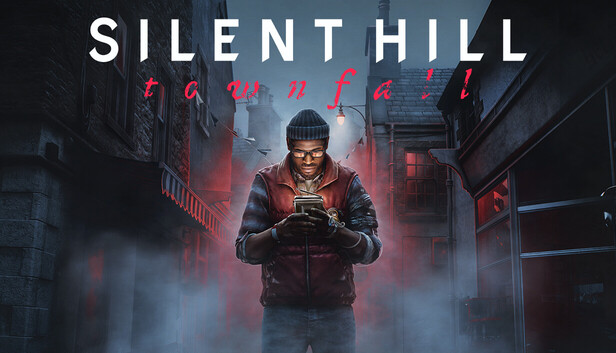
KONAMI, Annapurna Interactive
Returning to an island town to ‘put things right’, Simon Ordell descends into a world of tense evasion, explosive confrontations, and mind-bending puzzles that slowly surface the truth of St. Amelia.